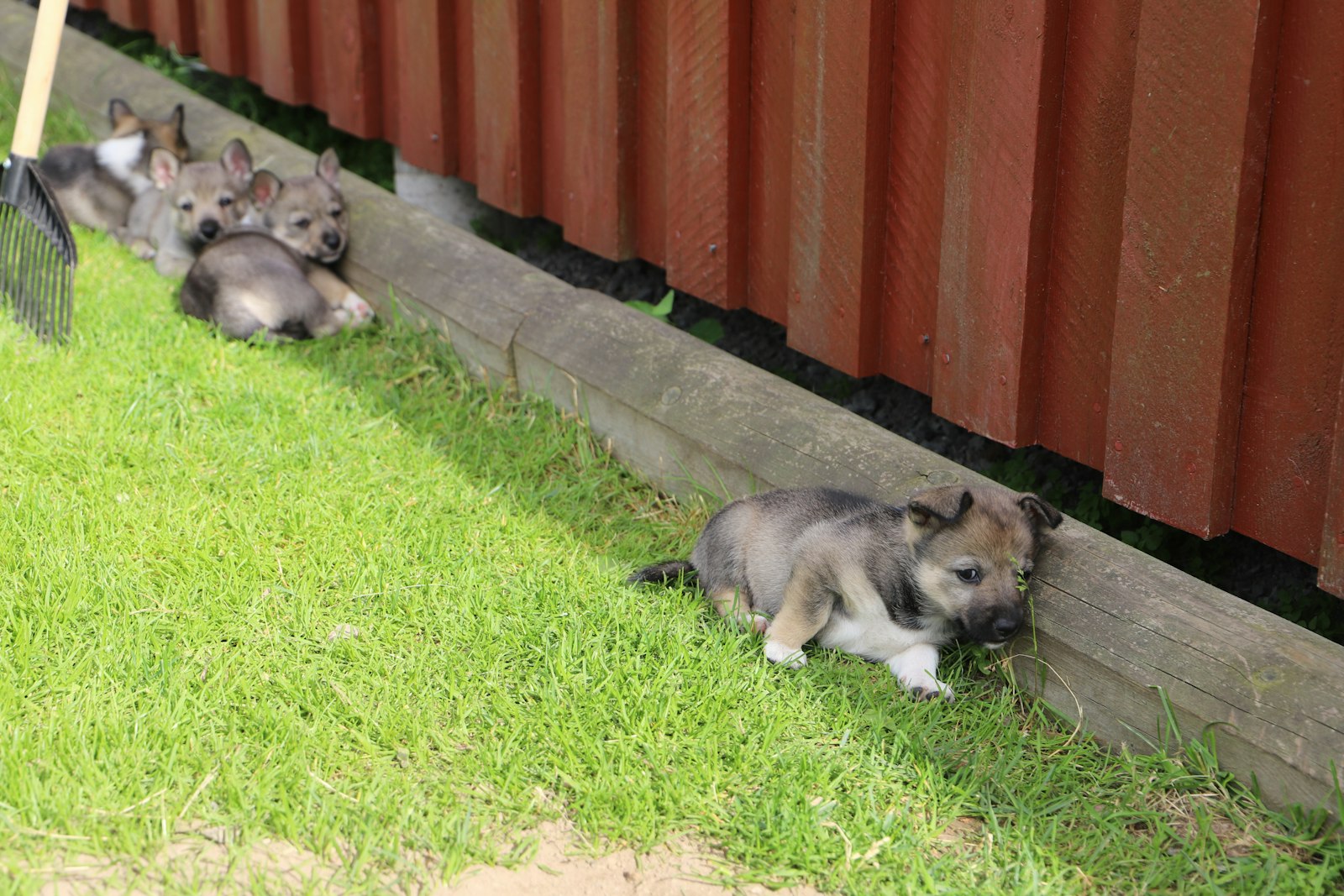
If you have a young puppy at home, it is completely normal to wonder when dog daycare becomes an option. For a lot of owners, the question comes up sooner than expected. Work gets busy, puppies have endless energy, and daycare can sound like the perfect solution.
But the real question is not simply, “How old does my dog need to be?” It is whether your puppy is actually ready for that kind of environment.
Some puppies meet a daycare’s minimum age and still are not prepared for group care. Others do fine with a careful introduction and the right level of supervision. If you are looking into dog daycare in San Mateo, that difference matters. A good daycare can be a great fit for the right dog at the right stage. Start too early, though, and it can be overstimulating, stressful, or just more than a young puppy can handle.
There is no perfect age for every puppy
Many daycare facilities set a minimum age around the time puppies have started or finished their core vaccinations, often somewhere between 12 and 16 weeks. That makes sense from a health and safety standpoint.
Still, that minimum should be treated as a starting point, not a guarantee of readiness.
A four-month-old puppy and a six-month-old puppy can be very different when it comes to confidence, impulse control, coordination, sleep needs, and recovery after excitement. Even puppies from the same litter can mature at different rates. Breed tendencies, early social experiences, and overall temperament all play a role too.
That is why the best daycare programs do not go by age alone. They look at the whole dog.
Why some puppies are too young for daycare
Puppies are still developing in almost every way that matters. Their immune systems are maturing. Their social skills are unfinished. They tire out faster than they seem to. Many also have a hard time settling themselves once they get wound up.
That can make a busy daycare environment tough on a young dog. There are unfamiliar dogs, new people, doors opening and closing, group movement, noise, and a lot of stimulation packed into one place.
Some puppies respond by getting wild and overexcited. They may start practicing rough play, nonstop chasing, body slamming, frantic greetings, or an inability to calm down. More sensitive puppies may go the other way and shut down, cling to staff, or simply endure the day without really benefiting from it.
Neither outcome is what most owners are hoping for.
People often hear that puppies need socialization and assume more dog exposure is always better. It is not. Good socialization is about positive, manageable experiences, not unlimited interaction in a crowded setting.
Vaccines matter, but readiness matters too
One reason very young puppies should not start daycare too early is health. Puppies are more vulnerable before they are fully protected against common contagious illnesses, and any reputable daycare should have clear vaccination requirements.
But medical eligibility is only part of the picture.
A puppy can meet the vaccine rules and still not be emotionally ready for the pace of daycare. That is why a thoughtful evaluation process matters. A facility should want to know how your puppy handles strangers, new dogs, short separations, rest breaks, frustration, and changes in routine.
If a daycare is willing to accept any puppy as soon as the paperwork is complete, that is not always a reassuring sign.
Signs your puppy may not be ready yet
Age is only one clue. Behavior is often more useful.
Your puppy may not be ready for daycare yet if they:
- get overwhelmed quickly in new environments
- struggle to settle after excitement
- become mouthy, frantic, or overly wild when aroused
- seem fearful around unfamiliar dogs or people
- have difficulty being handled or redirected
- still need a lot of sleep and structure during the day
- have little experience spending calm, supported time away from home
None of this means anything is wrong with your puppy. Much of it is completely normal. It may just mean that a full daycare setting is asking for more maturity than your dog has right now.
For some puppies, a dog walker, short pet-sitting visits, a smaller puppy social group, or a training-based program is a better fit than standard daycare at first.
What readiness looks like
A young dog does not need to be perfect before starting daycare. But there should be signs that the environment will be manageable.
That usually means a puppy can recover reasonably well after excitement, stay curious without becoming chaotic or panicked, respond to redirection, and tolerate short periods away from the owner without falling apart. It also helps when the puppy has already had positive exposure to different people, surfaces, sounds, and calm dog interactions.
The daycare itself matters just as much. Younger dogs usually do better when staff provide closer supervision, shorter play sessions, regular rest, and careful group matching. A puppy should not just be dropped into a large general playgroup and expected to figure it out.
Why rest matters more than owners expect
One of the most common mistakes with puppies is assuming they need constant activity. They often act like they do, right up until they tip into overtired chaos.
A puppy that stays stimulated too long may start barking more, playing too roughly, making poor choices, or losing the ability to settle. That can look like excitement, but it is often fatigue and overstimulation.
A balanced puppy day needs real downtime. If you are touring dog daycare options in San Mateo, ask how younger dogs rest during the day. Do they get quiet breaks? Are they rotated out of play? How do staff tell the difference between healthy play and an overtired puppy going off the rails?
Those questions usually matter more than whether the facility promises nonstop action.
Good daycare should evaluate fit, not just age
The best daycare programs do not answer this question with a simple minimum age. They also want to know whether your puppy should be there yet, how introductions are handled, what type of group your dog would join, and what happens if your puppy is not coping well.
That kind of honesty is valuable.
If you are comparing dog daycare in San Mateo, look for a facility that talks clearly about gradual introductions, play style, supervision, rest, and how they assess temperament. Convenience matters, especially for busy local owners, but convenience should not outweigh developmental fit.
Sometimes the best answer is not full-day daycare several times a week. It may be a shorter visit, a slower ramp-up, or waiting a little longer while your puppy builds confidence and coping skills.
For San Mateo puppy owners, timing matters
In a place like San Mateo, where many households are juggling work, errands, and full schedules, daycare can sound especially appealing during the puppy months. A young dog with lots of energy can make the day feel long for everyone.
But earlier is not always better.
Many puppies benefit more from a steady home routine, short outings, training sessions, enrichment, naps, and carefully chosen social experiences than from jumping straight into group daycare. Walks, one-on-one care, and calm exposure to the world may do more for a puppy’s development than hours of high stimulation around a large group of dogs.
So, what age is too young for dog daycare?
In practical terms, a puppy is too young for dog daycare when the environment is asking for more than that puppy can handle safely and comfortably.
That might be because vaccinations are incomplete. It might be because the puppy cannot yet settle, recover, or cope with that level of stimulation. It might also be because the daycare is not well set up for younger dogs in the first place.
For some puppies, that means 12 weeks is too young. For others, 16 weeks is still too young. And for some, a carefully managed introduction at the right stage can work well.
The most useful answer is not a single age. It is readiness.
If you are searching for dog daycare in San Mateo for a puppy, look for a program that evaluates the whole dog, not just the birthday. The right facility should be comfortable saying, “Yes, your puppy looks ready,” “Yes, but let’s start slowly,” or “Not yet.”
That last answer may be disappointing in the moment, but it is often the responsible one. For a young dog, starting at the right time is far better than starting too soon.